
The Benefits of Meatless Monday
What is Meatless Monday?
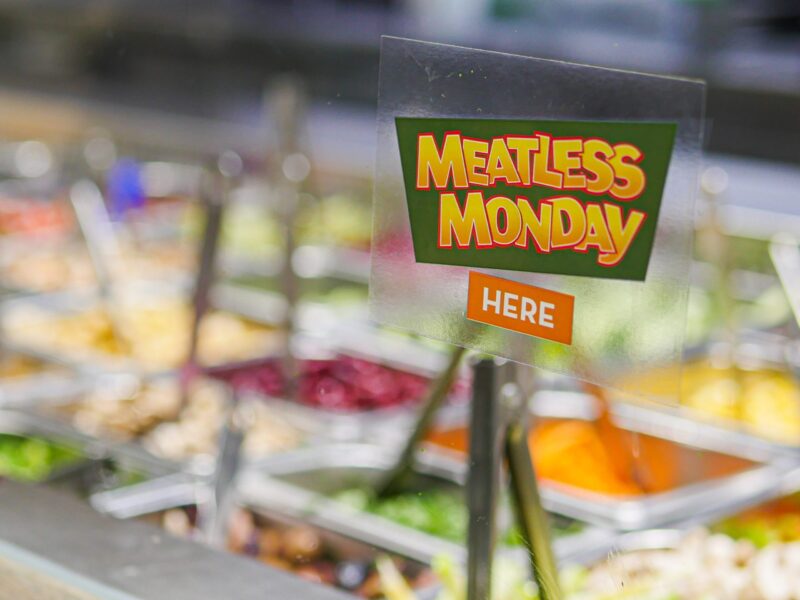
Meatless Monday is a simple concept that can make a big difference in our personal health and the health of the planet. The idea was first introduced during World War I as a way to reduce consumption to help the war effort and was revived in 2003 as a non-profit public health initiative.
Today, Meatless Monday is supported by millions of people in over 40 countries and is backed in science and research by the Johns Hopkins Bloomberg School of Public Health Center for a Livable Future.
Why Monday?
Research suggests that people are more open to trying healthy behaviors at the start of the week. Monday offers an opportunity to “reset” and get back on track after any lapses over the weekend and studies show people that get back on track at the beginning of the week are better able to maintain progress over time.
Why Meatless?
Meatless Monday can make a big difference for your health and the health of our planet. Replacing meat with plant-based choices each Monday can offer numerous health benefits and help you take action against climate change by reducing your carbon footprint and helping you conserve precious environmental resources.
For Your Health
Consuming less red and processed meat and more plant-based foods such as vegetables, beans, soy, and nuts can offer many potential health benefits:
- Eating less meat and more plant-based foods, such as vegetables, beans, and nuts, can improve heart health and reduce the risk of heart disease
- Skipping even a half serving of meat every day and replacing it with a plant protein like beans or tofu can decrease your risk of getting type 2 diabetes
- Substituting plant-based foods for meat can help you maintain a healthy weight
- Cutting back on red and processed meat and eating more plant-based foods can promote kidney health
- Beans, nuts, soy, and other vegetables can give you all the protein you need in one day
For the Planet
Reducing consumption of meat can help contain production of greenhouse gases that impact climate change. It can also help lessen the demand for precious environmental resources such as land, water, and energy.
- Livestock production creates more greenhouse gases than the entire transportation sector – all the cars, trucks, planes, and trains in the world
- Livestock production uses 75% of the earth’s agricultural land
- Producing ONE quarter-pound beef burger uses 425 gallons of water – enough water to fill 10 bathtubs
- Producing ONE quarter-pound beef burger uses up enough energy to power an iPhone for 6 months
- Skipping one serving of beef every Monday for a year saves the equivalent emissions to driving 348 miles in a car.
Ready to Start a Program?
Here's how you can bring Meatless Monday to your organization.